Aren’t you just a bit curious about what John had to say? John 1:19-20


In a recent post, I talked about spending time in a psyche hospital and how they asked me how long my parents had been alcoholics. That generated some negative feedback, not from a reader, but from a relative.
Sadly, I allowed his input to almost shut me down, and for that, I apologize. Fortunately, I got a phone call from a brother who told me to keep doing what God called me to do. That being said here is something I have been lax in posting.

The object of Bible study is to understand.

How many people do you know that understand the Bible, and can effectively convey it back to you?

I was asked recently if church leadership had contacted me about leading a Bible study.

(I suppose I should tell you that our book study had ended four weeks prior and a window of opportunity came to lead a Bible study when our group leader pointed out that he had been asked already and if he was not available was anyone else interested. I told our leader yes, and made the point of telling that particular pastor yes also.)

I answered the brother, with a resounding No. His response was for me to develop a format so that I could present what I intended to do, to church leadership. Having been recently involved with a book guided Bible study, I found it to be atrocious in its context, as the authors taught fallacies, traditions and directed the reader to assume false scenarios through their wording of the text. I want no part of that, but, I also realize that the modern church thinking is that we have to race through the Bible because people will get bored and leave – the church in its entirety; then, let them go.

I have no problem with leadership asking me to lead some book guided study that is filled with conjecture and tradition, however, you should know that I will contest every time I think it’s wrong and integrate a verse by verse approach as I deem necessary. What then happens to your time frame?

I often find myself surrounded by fools who tell me, “we cannot understand all of what we read” (This usually occurs when the book of Revelation or prophecy come into the discussion. What they do when they say that, is prove how little they read and their lack of desire to know. As for the boring aspect. Teachers are boring, but the Word of God is alive, and there is nothing boring about that.

Now, let’s continue with the Gospel of John.

The NASB entitles this section, “The Testimony of John the Baptist.”

Since I have always understood a testimony to be what one says, either in defense of themselves, about something they have seen, or in defense of someone else. Aren’t you at least curious what John the Baptist had to say? So were the Jewish leaders. One aspect of what he said was this:

John 1:19-20 ERV, The Jewish leaders in Jerusalem, sent some priests and Levites to John to ask him, “Who are you?” He told them the truth. 20) Without any hesitation,

A study Bible.

A study Bible. (Photo credit: Wikipedia)

he said openly and plainly, “I am not the Messiah.”

If you are an avid reader of my work, then you know I prefer the NASB translation. The NASB finishes this paragraph with the word Christ instead of Messiah, as do many others, however, there are about as many who end with “the Messiah.” This choice of terminology and our casual way of handling it is another example of where our Westernization of the Bible comes into play. When we read Christ, as the NASB puts it, what do we see? Sadly, it is often little more than a man that has yet to come into His own? We don’t see God standing there as a man; neither do we see a triumphant king, yet to come into power. No, we see a man that is frail and insipid, unable or unwilling to defend himself. We see him exactly as the prophet Isaiah said we would, a lamb about to be lead to the slaughter.

Isaiah 53:2-4 NASB For He grew up before Him like a tender shoot, And like a root out of parched ground; He has no stately form or majesty That we should look upon Him, Nor appearance that we should be attracted to Him. 3) He was despised and forsaken of men, A man of sorrows and acquainted with grief; And like one from whom men hide their face He was despised, and we did not esteem Him. 4) Surely our griefs He Himself bore, And our sorrows He carried; Yet we ourselves esteemed Him stricken, Smitten of God, and afflicted.

In today’s world, which is far too concerned with marketability and packaging, there was nothing here that could be sold to the public. Besides all that, there was this lingering question about Jesus familial heritage. We understand this to be a valid assertion for the Pharisees, on several occasions, rudely rebutted him when they said, “we know who our father is!” Their statement was very intentional, meant to hurt and degrade Jesus in front of those who heard them.

But, we fail to ask, what does the word Christ mean? So, even if John the Baptist used the word Christ instead of Messiah, and he may have, is this a problem? Not really, and here is why:

It is the Greek word Christos and means anointed, that is, the Messiah.

When you consider the languages forced upon the Jews of that day, you come to realize that Greek was the language of the ruling authority. Jesus also spoke Aramaic and may have spoken Hebrew. To call Jesus the Christos would have been a far stretch for the chief priests and elders for it means the anointed one, and hence the Messiah. If they did this, they would have been admitting that He was the Son of God, and they were not going to do that. When Jesus rode into Jerusalem that day, on a young donkey, they all recognized that this was something different, something rare, and the entry mode for Kings. The strongest assumption of the people was that Jesus must then be the king, and these common folk, longing for freedom, cried out appropriately.

This dialogue about Jesus’ entry into Jerusalem may not answer the question for many, so I’ll give you some scriptures that may help to identify Jesus as the Son of God, a high priest, anointed by God, and Messiah that He truly was.

1Samuel 2:35 ‘But I will raise up for Myself a faithful priest who will do according to what is in My heart and in My soul; and I will build him an enduring house, and he will walk before My anointed always.

Is 1Samuel 2:35 a description of Jesus? Absolutely, but his identity is cloaked in veiled language that speaks in the future tense. If you go back to find the context of this statement you end up at 1Samuel 2:27 where an unknown man, a prophet, comes to Eli, the priest, and points out the changes that are to come because Eli did not act according to God’s plan. The prophetic declarations take us to verse 35.

Hebrews chapter 10 talks about Jesus, the faithful high priest who performed every detail. As one “who will do according to what is in My heart and in My soul.” Jesus filled that role precisely and told the Jewish leaders so. We see this in John chapter five.

John 5:19 NASB Therefore Jesus answered and was saying to them, “Truly, truly, I say to you, the Son can do nothing of Himself unless it is something He sees the Father doing; for whatever the Father does, these things the Son also does in like manner.

And in John 12:49-50 we have Jesus telling the Jewish leadership of the day, that He only said what He heard his Father, God, saying.

John 12:49-50 NASB “For I did not speak on My own initiative, but the Father Himself who sent Me has given Me a commandment as to what to say and what to speak. 50) “I know that His commandment is eternal life; therefore the things I speak, I speak just as the Father has told Me.”

There is that other thing that plays a role in this question, “who are you?

This next passage is one every Jewish kid would have learned in Synagogue school.

Malachi 4:5-6 NASB “Behold, I am going to send you Elijah the prophet before the coming of the great and terrible day of the LORD. 6) “He will restore the hearts of the fathers to their children and the hearts of the children to their fathers so that I will not come and smite the land with a curse.”

The Jews, anticipated Elijah coming again.

Now, how he would come is debatable, for example: in spirit, or in the flesh. There was no question that he would come again and they anxiously awaited him. Why? For the Torah (Law) clearly, states that man will return to the earth in death. We can find this in multiple locations: Genesis 3:19; 2Samuel 14:14, and Job 14:5. The idea that it is appointed for man once to die and then the judgment comes from the New Testament in Hebrews 9:27.

Because we are also trying to find those things that would have instructed the Jews of Jesus day, we really should exclude Hebrews as an influence, particularly as it would not have been written at the time of John the Baptist. Historically Elijah was known to have been caught up in a fiery chariot unto God; then we make the logical assumption that Elijah did not die and must at some point be returned to expire, following the conventional path of man.

What other problems we could have with Elijah’s return?

The answer resides in the verse from Malachi that we just looked at:

Behold, I am going to send you Elijah the prophet before the coming of the great and terrible day of the Lord.”

What about a few more references to the terrible day of the Lord.

Many tell me that I make these posts too long, but try to consider the person who reads this and does not have access to a Bible. Another problem could easily be the abbreviation of references that do not convey the context or the scenario adequately and therefore wrongly feed skewed misconceptions about God’s timing and the event that is going to happen.

The prophet Joel went into a long oration inspired by the Holy Spirit, in which he describes events that cover a substantial amount of time, and, demonstrate a God that still shows a willingness to relent if men will humble themselves before Him. It also includes the paragraph about the sons and daughters that dream dreams and prophecy as God pours out His Spirit upon them. Does this all happen in a day? I don’t think so, but it can happen over a “seven-year” period.

Joel 2:30-32 NASB “I will display wonders in the sky and on the earth, Blood, fire, and columns of smoke. 31) “The sun will be turned into darkness And the moon into blood Before the great and awesome day of the LORD comes. 32) “And it will come about that whoever calls on the name of the LORD Will be delivered; For on Mount Zion and in Jerusalem There will be those who escape, As the LORD has said, Even among the survivors whom the LORD calls.

While Joel gave us some hope, Isaiah speaks of making the land desolate and destroying the sinners out of it. This descriptive includes the darkening of the sun and an impairing of the moon’s light. (There are several places in the world, at present, where the populace rarely see the sun or moon thanks to smog.)

Isaiah 13:9-11 KJV “Behold, the day of the LORD comes, cruel both with wrath and fierce anger, to lay the land desolate: and he shall destroy the sinners thereof out of it. 10) For the stars of heaven and the constellations thereof shall not give their light: the sun shall be darkened in his going forth, and the moon shall not cause her light to shine. 11) And I will punish the world for their evil, and the wicked for their iniquity; and I will cause the arrogance of the proud to cease, and will lay low the haughtiness of the terrible.”

The Apostle John, in relating his vision of the end times says, that the stars fall to the earth; the heavens depart like a scroll, and the earth is shaken by a serious of vicious earthquakes. These events are so frightful that the rich, the kings of the earth and the great men have hidden in elaborate caves.

Take a moment to look at this article from the Daily Mail.com, which runs in the U.K. Written by By Isabel Hunter For Mailonline and Published:15:42 EST, 13 April 2016.

http://www.dailymail.co.uk/news/article-3538525/Where-pandemonium-strikes-Super-rich-buying-underground-bunkers-installing-panic-rooms-luxury-apartments-protect-against-revolutions-natural-disasters.html.

In the article, it talks about the ultra rich who are buying these complexes to protect themselves from the insanity that is coming upon the earth. This is an accurate depiction of what we see in the book of Revelation.

Revelation 6:13-17 KJV “And the stars of heaven fell unto the earth, even as a fig tree casts her untimely figs, when she is shaken of a mighty wind. 14) And the heaven departed as a scroll when it is rolled together, and every mountain and island were moved out of their places. 15) And the kings of the earth, and the great men, and the rich men, and the chief captains, and the mighty men, and every bondman, and every freeman, hid themselves in the dens and in the rocks of the mountains; 16) And said to the mountains and rocks, Fall on us, and hide us from the face of him that sitteth on the throne, and from the wrath of the Lamb: 17) For the great day of his wrath is come; and who shall be able to stand?”

So when is the day of the LORD going to take place?

There is really only one place prescribed in scripture for this to happen and it is after the harpazo or snatching away of the church. Yes, it also entails the climatic end where Jesus physically returns with a vengeance and plants his feet on the Mount of Olives, at the end of the time of wrath, (we love to call it, The Great Tribulation.) Sadly, most of you still have a problem in understanding the timing involved because the Time of God’s wrath, is this entire period after the church is snatched out of here. This scenario is equatable to the flood account with Noah and righteous Lot, where God removed the righteous from the harm that was to come. In both cases God had them removed just moments before destruction began. And make no mistake, while God will be pouring out His wrath man, it seems, will be ramping up the violence. Since one of the principal methods of violence we see in scriptures includes the beheading of “believers,” then it is easy to ascertain the “religion” that loves to do that. We, in what we deem the civilized nations, still do not wish to believe this level of destruction and violence can befall us. How naive we are, as our governments have been on a fast-paced course of action to eliminate the overabundance of users (that includes food and resources) and they know they can do this through what they think is controlled violence and poisons.

(Again, do not be naive, the same people that brought you chemicals for a better tomorrow are owned or controlled by the same people that run the governments, and there is an intentional effort to reduce the population legally. Why do think abortions are government funded?)

Because the time that is labeled, the day of the Lord, is a time of wrath; then you must know that the church is not meant to partake in that time of destruction. We see this in several places and here is one of them.

1 Thessalonians 5:9 NASB 9) For God has not destined us for wrath, but for obtaining salvation through our Lord Jesus Christ,

Some would say, that’s fine, but it’s not enough. Are there any reliable references from the Old Testament? Sure there are, and one is found in Malachi, the last book of the Old Testament.

Malachi 3:16-17 NASB Then those who feared the LORD spoke to one another, and the LORD gave attention and heard it, and a book of remembrance was written before Him for those who fear the LORD and who esteem His name. 17) “They will be Mine,” says the LORD of hosts, “on the day that I prepare My own possession, and I will spare them as a man spares his own son who serves him.”

Don’t make the mistake of thinking this excludes followers of Christ from the extraordinary but everyday violence that surrounds us, for we were told that “in this world, you will have tribulation.” (You can find this reference in the Gospel of John chapter 16 verse 33.)

One last thing – I have been talking to so-called Christians as my target audience. Do not think you are excluded, for the main reason God sent His son, was to save the entire lost world, broken by this “sin” thing that corrupts us. I find it easier to think in terms of a damaged DNA strain that is common to man. From the scientist point of view, having never seen a man without a damaged DNA chain, would not think it anything but normal. Having lived just a little, and seen the side of life that includes Christ, I can tell you that there is a difference and it is life. No, I don’t wake up in a bed of roses, my life is tough, just like everyone else’ is, but I have a confidence that there is a life beyond this garbage here on earth. I mean really, you think life is nothing more than collecting trophies and then you turn into worm fodder.

Posted in bible study, Gospel of John, In Christ, Prophetic, The Word was God, Thoughts on scripture | Tagged , , , , , , , , , , , , , , , , | 3 Comments

An attempt at damage control.


In a previous post entitled, Why would John say that?, I got personal about having to spend time in a psyche hospital. I continued my rant, in the hopes of helping others. I have never been good at grammar and you can’t see the expressions on my face, so you don’t know whether this brings me sorrow or grief. Regardless, my rants, which I understand conveyed that my parents “guzzled alcohol” was not what I intended to portray, because to the contrary, they have been nothing more than generous, not only to me, though I did not deserve it, but to others as well. And, that have both tried, like I do, to show God’s life through their actions. I apologize for hurting my parents feelings.

Sincerely Ozzie

Posted in Thoughts on scripture | Leave a comment

Why would John have to say that? John 1:18


The Apostle John had just finished saying,

“John *testified about Him and cried out, saying, “This was He of whom I said, ‘He who comes after me has a higher rank than I, for He existed before me.'” For of His fullness we have all received, and grace upon grace. For the Law was given through Moses; grace and truth were realized through Jesus Christ.” John 1:15-17 NASB

What the Apostle John had just said was almost too much to handle, and, keep in mind that John is addressing Jewish converts. A group that before receiving salvation seemed to struggle with the idea that Jesus was the Messiah/God in the flesh. He finished the thought with, “For the Law was given through Moses; grace and truth were realized through Jesus Christ.”

You can almost feel the tension in the air as they read this last statement.

jesus_and_nicodemus

jesus_and_nicodemus

I imagine the converts wanted to understand, but this needed to be chewed on for a moment. I can just picture John taking an intentional pause, breathing deeply, and then adding this next statement:

“No one has seen God at any time; the only begotten God who is in the bosom of the Father, He has explained Him.” John 1:18 NASB

Why would John have to say that?

We have to go back to his opening lines and try to grasp how the minds received what he said. Some may have been wondering if Jesus still walked the earth. Besides, we are talking about the all mighty God, right?

You would think that the concepts the Apostle John was setting forth were already understood.

Even I can understand that the law of God came through the mouth of Moses, but if God conveyed what we typically see as anger and wrath through the law, then how do I embrace grace and truth, which almost seems in opposition to the law. Furthermore, how do I accept this “freedom” as being through Jesus, who was also here as God, or at least a representative of Him?

Let’s try to grasp this for a moment.

  • On two occasions Jesus spoke of how he and the Father are one. We find both of those detailed in John’s Gospel: John 10:30 and John 17:22.

    When Jesus made the statement in John 10:30, the religious Jewish crowd (this probably consisted of the chief priests, elders, scribes, Pharisee, and Sadducees) reacted, and poorly. To them Jesus words were blasphemous, and, as you can see by their response, they were willing to stone Jesus to death.

John 10:31-33 NASB, The Jews, picked up stones again to stone Him. 32) Jesus answered them, “I showed you many good works from the Father; for which of them are you stoning Me?” 33) The Jews answered Him, “For a good work we do not stone You, but for blasphemy; and because You, being a man, make Yourself out to be God.”

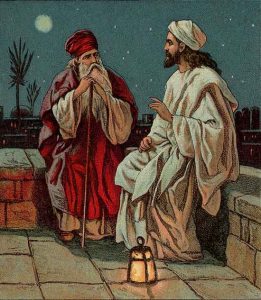
But what is the obvious problem for the religious Jews? They were not going to accept Jesus words. This is not true of all of them because of Nicodemus, one of the elders, came to Him by night. Nicodemus tells us that many believed. Believed what? Jesus word.

  • Young’s Literal Translation of John 17:22, gives another view of Jesus relating who He was when He said, “And I, the glory that thou hast given to me, have given to them, that they may be one as we are one;”

    Fairly direct, wouldn’t you say?

  • In Luke’s gospel, chapter 22 verse 30, it is recorded that Jesus referred to the table of God as His table.

    that you may eat and drink at My table in My kingdom, and you will sit on thrones judging the twelve tribes of Israel.” (NASB)


    But once again we have a problem.

    To whom is Jesus saying this? The disciples. We make the assumption that this means twelve men, but we find out that by the time the Holy Spirit fell on them all, there was as many as 120 who carried that title. If the message was that Jesus and God were one and they were excited about that aspect, then how and why would that have been prevented? Only through fear, intimidation, and threats, and that is exactly what the religious Jews did.

  • I will end this rant with a passage from Mark’s gospel.

    Held like a criminal before the high priest and elders, Jesus was challenged.

    Mark 14:60-64 NASB, The high priest, stood up and came forward and questioned Jesus, saying, “Do You not answer? What is it that these men are testifying against You?”


    As you can see, He answered them with “I am.

    61) But He kept silent and did not answer. Again the high priest was questioning Him, and saying to Him, “Are You the Christ, the Son of the Blessed One?” 62) And Jesus said, “I am; and you shall see THE SON OF MAN SITTING AT THE RIGHT HAND OF POWER, and COMING WITH THE CLOUDS OF HEAVEN.”


    Those listening, and they were listening intently, heard every word. It didn’t take lengthy discussion because they understood the implications of every word, comma, and period, and yes, I know that the Greek has no punctuation. The list of accusations was already sufficient and substantial. As soon as Jesus said these words, “I am; and you shall see THE SON OF MAN SITTING AT THE RIGHT HAND OF POWER, and COMING WITH THE CLOUDS OF HEAVEN.” the high priest intentionally ripped his garments.

    From Kenneth Wuest’s Word Studies in the New Testament, we get this: “This tearing of garments was an old sign of mourning or sorrow first mentioned in Gen_37:29. The law forbad the high priest from rending his garments in the case of private troubles (Lev_10:6; Lev_21:10), but when acting as a judge, he was required by custom to express in this way his horror of any blasphemy uttered in his presence.” – Me, this was, of course, their interpretation, not knowing that Jesus was God.

    63) Tearing his clothes, the high priest *said, “What further need do we have of witnesses? 64) “You have heard the blasphemy; how does it seem to you?” And they all condemned Him to be deserving of death.


    We assume that this was the last straw for putting Jesus to death, but they had tried to kill him on many occasions. What we have to keep in mind is that death was a necessary price to pay for our redemption and a price that He paid willingly.

Now the question, why would the Apostle John have to say the things he said, comes full circle. Hopefully, I presented enough evidence to convince the Bereans among us, that Jesus was God. Do I fully grasp the concept? No, but I am not foolish enough to challenge the idea any longer, and my lack of understanding has created an insatiable desire to learn more completely these things the Jewish leadership understood – and yet repressed. This desire to know the God I choose to serve is the main reason I write, that and the horrific lack of knowledge we “followers” of Christ have about most anything when it comes to the Bible. Simply put, we choose to live in a world of fairy tales, such as David and Goliath, believing that David was just the cutest little twelve-year-old boy. Wake up! What fool would let a child attempt to defend a nation, knowing full well the horrors of enslavement that would befall all of Israel?

Setting the idea of fairy tales aside, the question now is, who do you say this Jesus is?

The answer is important, whether you believe it or not, because:

  1. Jesus is coming soon to gather those who belong to him, back to himself.

  2. This void left by a praying church will leave many here on earth to suffer the hateful indifference of a godless society; hell bent on the collection of riches. Their decisions, which we are already experiencing, include the killing of those associated with Christ.

While I am not the judge and do not know the hearts of those around me, God does, and the religious practices of these cult religions have shown them enough truth to understand that God is real and that the world around you, at this point, wants you dead.

All my life, practically living in the church, has sheltered me, to some degree, from the world. What that means is that I am thankful I did not develop a taste for most of what the world offers, like drugs and alcohol. What I did find myself consumed by was co-dependency, anxiety, depression, and a Viking-like anger that I used to keep myself safe (so I thought) from people who had the skills to push others around. [This idea of pushing people around is often subtle and done under the guise of people skills.] So, does growing up in church give me an advantage? Hardly, it puts you in the sights of individuals, who have a religious side to them but are almost as twisted and evil as the world.

I am not going to lie to you, growing up in the church was hard, it should not have been, but it was. Later on in life, after a wife cheated on me for the second time, I allowed myself to indulge in some Viking-like rage and ended up in a psych hospital for a month. Thankfully I learned some things about myself that enable me to walk calmly through most of those anger filled moments. To add to my grief, the psych staff asked me how long my parents had been alcoholics. Try to imagine the questions your mind throws at you in a moment like that, when, to my understanding, my parents have never touched alcohol and yet act like they guzzled the stuff. I still have trouble with it, and, have considered going to something like an Adult Children of Alcoholics group, just to see what help I could gain in understanding me.

All-in-all, I consider myself fortunate that I found Christ at such an early age because the life I lived in Christ gave me a foundation that was rich in a diversity that included: the manifestations of the Holy Spirit. Because of those experiences I have felt all the emotions, I associate with a God that loves me, but spread over many years. Feelings, by the way, buy you nothing in the long run as we are expected to live this life by faith. The problem with years of experience is that the time frame is broad enough for me to become almost numb to it, or at least not react appropriately to the moving of the spirit. It is in those times that I remind myself, as the song says, of all that he has done. Yes, I remind myself, not only from a historical point of view but also of how Jesus has shown up in my life as well.

Jesus, make me yours!!

Posted in bible study, End times, Gospel of John, Hope, In Christ, Our being caught up, recovery, The supremacy of Christ, The Word was God | Tagged , , , , , , , , , , , , , , , | 2 Comments

Grace and truth were realized through Jesus Christ. John 1:15-17


No, I am not being lazy, just busy. If you must know we bought a house, got married and have other things to do, like maintain our sanity. Therefore I am reblogging a lot lately. Forgive me.

Posted in Thoughts on scripture | 3 Comments

To those that live by the letter of the law, that means nothing! John 1:14


Posted in Thoughts on scripture | Leave a comment

What scripture calls us to testify about. John 1:7-13


Posted in Thoughts on scripture | Leave a comment

God sent a man. John 1:6


Posted in Thoughts on scripture | Leave a comment

He was the source of life – John 1:4,5


This something I posted recently on my Tuesday Bible bites site.

Posted in Thoughts on scripture | Leave a comment

The way that is blameless


I see far too much of me in this post.

Jo-Blogs's avatarThe Kingdom

lessons1971A child that lives with criticism, learns to condemn. It’s from a poem “Lessons from life” by Ronald Russell and also in a poem called “Children learn what they live” .

Constant criticism and verbal abuse are devastating for a child.  It eats away with at their self worth and undermines their self confidence.   He or she will grow up under-valuing or even hating themselves.

When I grew up, I continued speaking to myself with my parent’s words.  I believed them, condemned myself for my mistakes, and “shoulded” on myself.

The Lord is a soul restorer.  He wanted my future to be better than my past.

He gave me the words to Psalm 101,

“I will walk in my house with blameless heart.”

What do you think a person who has grown up with criticism and verbal abuse will think when they read that?

I pulled back from Him saying…

View original post 151 more words

Posted in Thoughts on scripture | Leave a comment

In the beginning, before all time. John 1:1


I don’t know about you, but I have had some odd conversations about this very thing. The conversations sound a lot like this:

  • So, when did time begin?

  • You mean, God was just hanging out in space and decided to create a universe?

  • Was God just bored?

  • What do you think He was doing before He had any light?

  • Wasn’t Jesus enough?

It would appear that this is the short explanation of when time began. Now as to the possibility that God was merely floating out in space, I frankly do not know the answer to that, and to spend any time on the idea just makes my head hurt, so we won’t. Sadly, there are many things I, nor you, do not know, but, like Dinosaurs, there is no denying that it/they happened, so we take what we know and understand and do the best we can with it.

While I do not think there is anyone that can legitimately answer most of these questions, they do open some interesting doors of thought about the magnificence of God if you are willing to let the Word speak to your heart.

Let’s dive in.wp-1477763727678.jpg

John 1:1 AMP “IN THE beginning [before all time] was the Word (Christ), and the Word was with God, and the Word was God Himself.” [Isaiah. 9:6.]

Before we go one step further, let’s see what Isaiah 9:6 adds to this.

For to us a child is born, to us a son is given: and the government shall be on his shoulder: and his name shall be called Wonderful, Counselor, The mighty God, The everlasting Father, The Prince of Peace.”

You would be right if your initial assumption were that Isaiah was talking about Jesus, the Son. But note that it says, “his name shall be called …, The mighty God, The everlasting Father.”

If we are going to grasp the depth of what John is attempting to say, then we need to try and grasp the idea that John is writing to a Jewish community of believers. In doing that John is trying to make a point about the Messiah and His supremacy; in saying, “the Word was with God, and the Word was God Himself,” does just that.

Many will challenge the idea that the Apostles did anything besides preach to the Gentile world. Let’s see if I can alter your thinking. In the book of Acts, Paul and Barnabas are sent to Jerusalem, to address the apostles and elders about a teaching that emphasized the physical act of circumcision: “Unless you are circumcised, according to the custom taught by Moses, you cannot be saved.” (You find this reference in Acts chapter 15) Now I am sure that does not sound like much to many of you, but this an extremely Jewish concept, taught in the Torah. The primary purpose the Apostles and elders in Jerusalem forwarded such an idea was because of their belief that salvation through Jesus, a Jewish Messiah, was a strictly Jewish benefit. Sure, there was room for a few exceptions, and we see that with Peter and his interactions with the Roman Centurion and his family.

The  Apostle Peter eventually stood to say something to silence the discussion, agreeing that God had accepted the Gentiles through Peter. Sadly, we do not see Peter taking this good news any further that the Roman Centurion’s home. While Foxes Book of Martyrs may point out something historically different, we do not see the Apostles dealing with anyone else but Jews in scripture.

Mind you much time has passed, and John’s understanding of this God-man he walked beside has deepened. However, while Jesus was walking with them, they did not grasp who he was. Is it possible that John came to understand who Jesus was based upon what he might have read from the Prophet Isaiah’s writings? Anything is possible, and, we cannot exclude the idea just because we do not see it in scripture. We do not see dinosaurs in scripture, but there is no denying that they were here.

We just looked at Isaiah 9:6 where it says, “his name shall be called …, The mighty God, The everlasting Father.” Is it possible that the Holy Spirit saw fit to establish and validate the Son all at once by pointing out that they are one and the same, and yet individual, capable of being the “son” that is given? Absolutely!

The following is what the verse looks like with the Strong’s numbers integrated into the passage.

John 1:1 NASB In the beginningG746 was the WordG3056, and the WordG3056 was with GodG2316, and the WordG3056 was GodG2316.

I want to focus on the phrase, “In the beginning.” The variations on translating this are wide:

  • The ERV says, “Before the world began, the Word was there.”

If you were to use the Literal version it italicized the word “the” to indicate that it was added for clarity. “In the beginning was the Word,”

  • While the ERV implies a time frame, the LITV conveys the process.

When I read from one of the most used translations, the NIV, I get this, “In the beginning was the Word.” “In the beginning was the Word,” strikes me as little more than a statement of fact, but doesn’t that present a problem as the mind immediately wants proof.

Since our “Treasury of Scriptural Knowledge” reference of “in beginning” leads to other passages, let’s see what they say.

the beginning: Joh_1:2; Gen_1:1; Pro_8:22-31; Eph_3:9; Col_1:17; Heb_1:10, Heb_7:3, Heb_13:8; Rev_1:2, Rev_1:8, Rev_1:11, Rev_2:8, Rev_21:6, Rev_22:13

Genesis 1:1 NET. In the beginning, God created the heavens and the earth.

The statement is comparable to what John said, and every Jewish reader would have had the loud tone of their teaching Rabbi in their head, as their mind turned back to Genesis and the Torah. This was the beginning of history, their story, and their knowledge of the Holy begins here.

Here, though, the word is Hebrew: רֵאשִׁית / rê’shı̂yth / ray-sheeth’. From the same as H7218; the first, in place, time, order or rank (specifically a firstfruit): – beginning, chief (-est), first (-fruits, part, time), principal thing.

Strong’s points us to the origin or base word H7218 – רֹאשׁ / rô’sh / roshe. From an unused root apparently meaning to shake; the head (as most easily shaken), whether literally or figuratively.

Based upon the Hebrew I see that I could have also said,

  • The first thing –

  • The order of things –

  • The principal thing (this opens another line of thinking in me.)

  • And finally, I might have said, the chief thing.

    (There again, another line of thinking, which contains the idea that multiple things were to be done.) Since God knows the end of a matter before it ever starts, then He was aware that putting an end to mutiny such as Satan’s, had to come. I suppose He could have done all that without us mucking it up, but here we are, and, we are a part of the plan.

The phrase, in the beginning, indicates a process. That means creation could have been an aspect of the process.

I briefly touched upon the Hebrew word rê’shı̂yth, but what about the Greek word for beginning, the place where we started?

“In the beginning.”

In the Greek, the word is: ἀρχή / archē / ar-khay’. From G756; (properly abstract) a commencement, or (concrete) chief (in various applications of order, time, place or rank): – beginning, corner, (at the) first (estate), magistrate, power, principality, principle, rule.

Once again we have the idea of a process, which opens the door to other things.

The TSK references continue with:

Colossians 1:17 NASB He is before all things, and in Him all things hold together.

Suggesting that Jesus was right there in the nothingness before creation.

Ephesians 3:9 NASB and to bring to light what is the administration of the mystery which for ages has been hidden in God who created all things;

Since we have pointed out that the Word was God – “In the beginning was the Word, and the Word was with God, and the Word was God.” (John 1:1 MKJV) Then, when we look at Ephesians 3:9 we can understand that God and Jesus are considered one and the same.

I will finish this portion by adding verses two and three to the mix.

John 1:1-3 MKJV In the beginning was the Word, and the Word was with God, and the Word was God. 2) He was in the beginning with God. 3) All things came into being through Him, and without Him not even one thing came into being that has come into being.

Allow me to point something out, “and without Him, not even one thing came into being that has come into being.” That happens to include you. For a variety of reasons the question has come up lately, and asks, are you comfortable with your relationship with the Father? For me, the answer is an immediate yes, but then my mindset tends to look at this as speaking about His love for me. I know He loves me. This statement on my part is not a boast; this came out of times of stress and pain where I cried out to God. It developed the kind of trust that one builds when someone sticks by you, especially when you do not think you deserve it. It does not, however, always override the negativity in my head, a negativity which comes from a lifetime of abuse in which co-dependency was unwittingly taught – I hope that was the case.

For a variety of reasons a question has come up lately, and asks, are you comfortable with your relationship with the Father? For me, the answer is an immediate yes, but then my mindset tends to look at this as speaking about His love for me. I know He loves me. This statement on my part is not a boast; this came out of times of stress and pain where I cried out to God. It developed the kind of trust that one builds when someone sticks by you, especially when you do not think you deserve it. It does not, however, always override the negativity in my head, a negativity which comes from a lifetime of abuse in which co-dependency was unwittingly taught – I hope that was the case.

An acquaintance recently made a comment about perpetrators who were getting minuscule sentences, while the abuse they inflicted stays with the victims for their lifetime. Understanding what I am about to say requires you to think outside the box. Perpetrators may not be criminal in their actions because, in some cases, they are only using words as their weapon. However, the damage haunts you forever. I deal with effects of that very thing to this day, holding memories of abuses inflicted by others as far back as elementary school – we are talking about a time frame that extends beyond fifty years. My fiancee does not understand, but then, neither do I most times. Though I wish it could just go away, the only hope I have is in the peace I obtain through my relationship with Jesus Christ.

Posted in bible study, creation, Gospel of John, The supremacy of Christ, The Word was God, Thoughts on scripture | Tagged , , , , , , , , , , , , | Leave a comment